
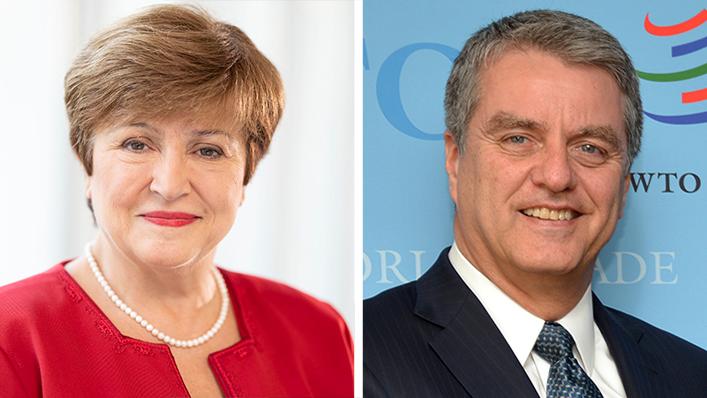
 International Monetary Fund (IMF) Managing Director Kristalina Georgieva and WTO Director-General Roberto Azevêdo issued a joint call on 24 April for governments to refrain from imposing export and other trade restrictions on key medical supplies and food and to quickly lift those put in place since the start of the year. (photo credit to the WTO)
In response to the COVID-19 pandemic, some governments have adopted measures to facilitate imports of medical products, such as cutting import duties, curbing customs-clearance processes, and streamlining licensing and approval requirements, the two agency heads noted.
Similar attention should be paid to facilitating exports of key items such as drugs, protective gear and ventilators, they added.
While global trade rules allow for temporary export restrictions to prevent or relieve critical shortages, “we urge governments to exercise caution when implementing such measures in the present circumstances”.
“What makes sense in an isolated emergency can be severely damaging in a global crisis,” they warned. “Such measures disrupt supply chains, depress production, and misdirect scarce, critical products and workers away from where they are most needed.”
“The result is to prolong and exacerbate the health and economic crisis — with the most serious effects likely on the poorer and more vulnerable countries.”
Ms Georgieva and DG Azevêdo also expressed concern with the decline in the supply of trade finance, which ensures that imports of food and essential medical equipment reach the economies where they are most needed. In addition, despite strong supply, export curbs on some food items are beginning to appear.
“The experience in the global financial crisis showed that food export restrictions multiply rapidly across countries and lead to ever greater uncertainties and price increases,” they noted.
The WTO and the Group of 20 offer two forums for global policy coordination on these important matters, the agency heads added.
The joint statement is below. It can be downloaded here.
WTO and IMF Joint Statement on Trade and the COVID-19 Response
As our members grapple with their response to the global health and economic crisis, we call for more attention to the role of open trade policies in defeating the virus, restoring jobs, and reinvigorating economic growth. In particular, we are concerned by supply disruptions from the growing use of export restrictions and other actions that limit trade of key medical supplies and food.
Trade has made cutting-edge medical products available throughout the world at competitive prices. Last year global imports of crucial goods needed in the fight against COVID-19, such as face masks and gloves, hand soap and sanitizer, protective gear, oxygen masks, ventilators, and pulse oximeters, totalled nearly $300 billion. Recognizing the importance of this trade, governments have taken dozens of measures to facilitate imports of COVID-related medical products — cutting import duties, curbing customs-clearance processes, and streamlining licensing and approval requirements.
We welcome these actions. Accelerating imports of critical medical supplies translates into saving lives and livelihoods. Similar attention should be paid to facilitating exports of key items like drugs, protective gear, and ventilators. Anticipating governments’ need to address domestic crises, World Trade Organization (WTO) rules allow for temporary export restrictions “applied to prevent or relieve critical shortages” in the exporting country. We urge governments to exercise caution when implementing such measures in the present circumstances.
This time is different
Taken collectively, export restrictions can be dangerously counterproductive. What makes sense in an isolated emergency can be severely damaging in a global crisis. Such measures disrupt supply chains, depress production, and misdirect scarce, critical products and workers away from where they are most needed. Other governments counter with their own restrictions. The result is to prolong and exacerbate the health and economic crisis — with the most serious effects likely on the poorer and more vulnerable countries.
To ramp up the production of medical supplies, it is essential to build on existing cross-border production and distribution networks.
Trade finance and food items
We are also concerned by the decline in the supply of trade finance. Adequate trade finance is important to ensure that imports of food and essential medical equipment reach the economies where they are most needed. Our institutions are tracking developments and engaging with key suppliers of trade finance.
In addition to restrictions on medical goods, curbs on some food items are starting to appear, despite strong supply. The experience in the global financial crisis showed that food export restrictions multiply rapidly across countries and lead to ever greater uncertainties and price increases. We are also concerned that if critical agricultural workers are not able to move to where the harvest is, crops could rot in the fields. Where new cropping seasons are starting, planting could be hampered, lowering both domestic and international supplies and increasing food insecurity. We urge governments to address these challenges in a safe and proportionate manner.
Cooperative effort needed
Amid the unfolding global financial crisis, global economic leaders in 2008 jointly committed to refrain for a year from new import, export, and investment restrictions. This pledge helped to avoid widespread trade restrictions that would have worsened the crisis and delayed recovery — just as trade restrictions deepened and prolonged the Great Depression of the 1930s.
A similarly bold step is needed today. We call on governments to refrain from imposing or intensifying export and other trade restrictions and to work to promptly remove those put in place since the start of the year. The WTO and the G20 offer two forums for global policy coordination on these important matters.
History has taught us that keeping markets open helps everyone — especially the world’s poorest people. Let’s act on the lessons we have learned.
